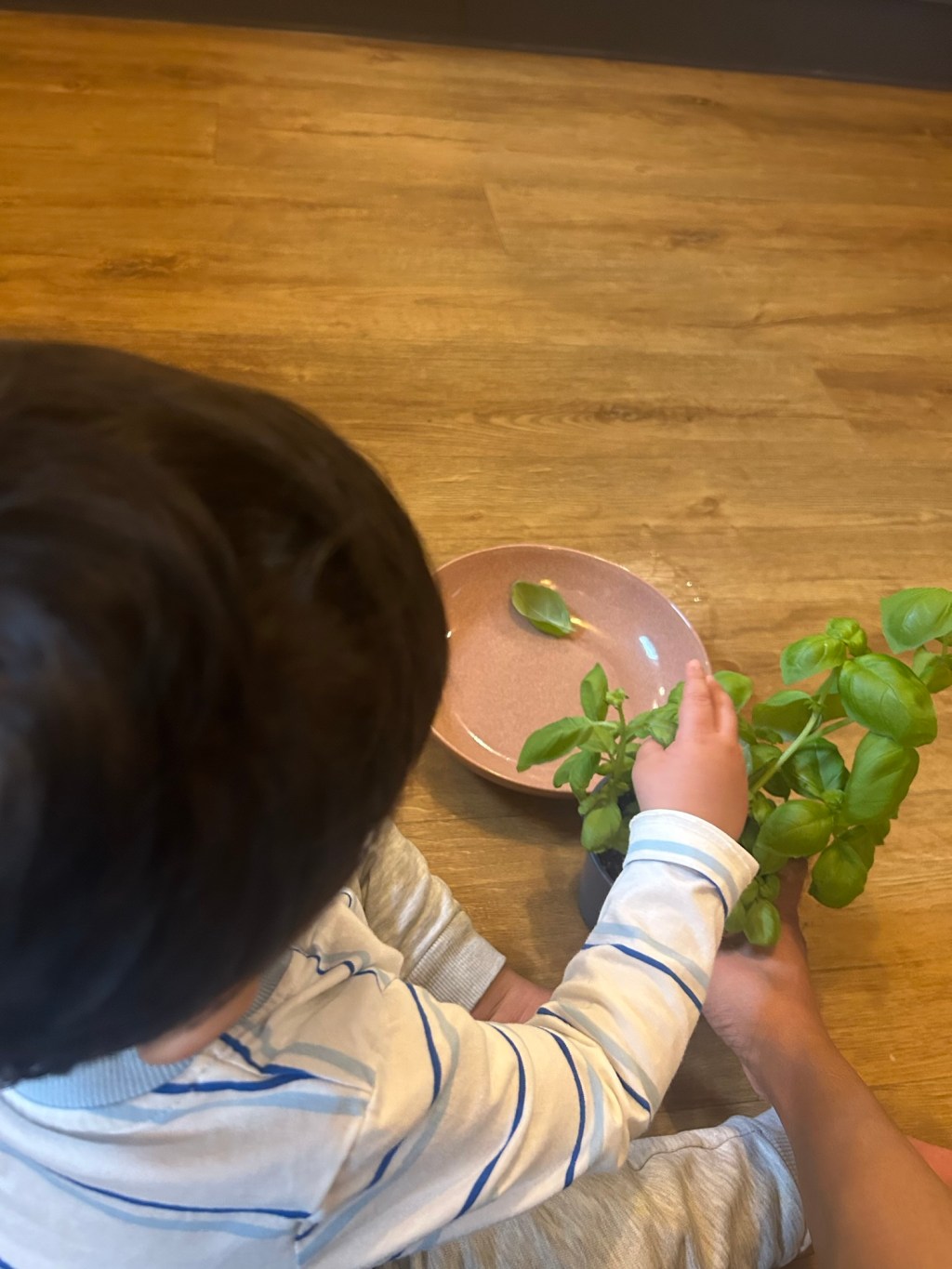
When setting up a Montessori environment at home, it’s easy to assume that toddlers need toys or activities to stay engaged. In practice, many parents notice something different — toddlers are often more interested in everyday tasks than in materials designed specifically for them.
In Montessori, this is closely connected to practical life. Practical life refers to real, everyday activities such as pouring, carrying, wiping, preparing food, and participating in daily routines. Maria Montessori observed that young children are naturally drawn to these kinds of tasks because they have a clear purpose and provide immediate feedback.
In the toddler years, this becomes particularly noticeable. Rather than being entertained, toddlers often seek involvement. They are drawn to what is happening around them and want to take part in it. This might look like standing in the kitchen while food is being prepared, carrying objects from one place to another, or repeating simple actions such as opening and closing containers.
From a developmental perspective, these activities support coordination, concentration, and independence. When a toddler pours water, even if it spills, they are learning about movement, control, and cause and effect. When they repeat the same action, they are refining their skills and building confidence through practice.
One of the key reasons toddlers are drawn to real work is that it is meaningful. Unlike many toys, which can have a fixed or unclear purpose, real tasks are connected to daily life. The child can see what they are doing and understand the outcome. This sense of purpose often leads to longer periods of focus and repetition.
Repetition is an important part of Montessori learning. In the early years, children repeat actions not out of boredom, but because repetition helps them master movement and build understanding. This is why a toddler may carry the same object back and forth or repeat a simple task multiple times.
Creating opportunities for real work at home does not require complex setups. It can be as simple as allowing a toddler to participate in everyday routines. This might include helping in the kitchen, carrying small items, wiping surfaces, or being involved in basic tasks.
In a Montessori home, the environment is prepared to support this kind of involvement. Items are placed within reach, tools are appropriately sized, and tasks are simplified so that the child can participate independently.
Over time, these small, repeated actions contribute to the development of independence and concentration. Rather than needing constant direction or entertainment, toddlers begin to engage more deeply with what is around them.
Understanding why toddlers are drawn to real work can help shift how activities are approached at home. Instead of adding more, it often becomes a matter of allowing the child to take part in what is already there.

Leave a comment