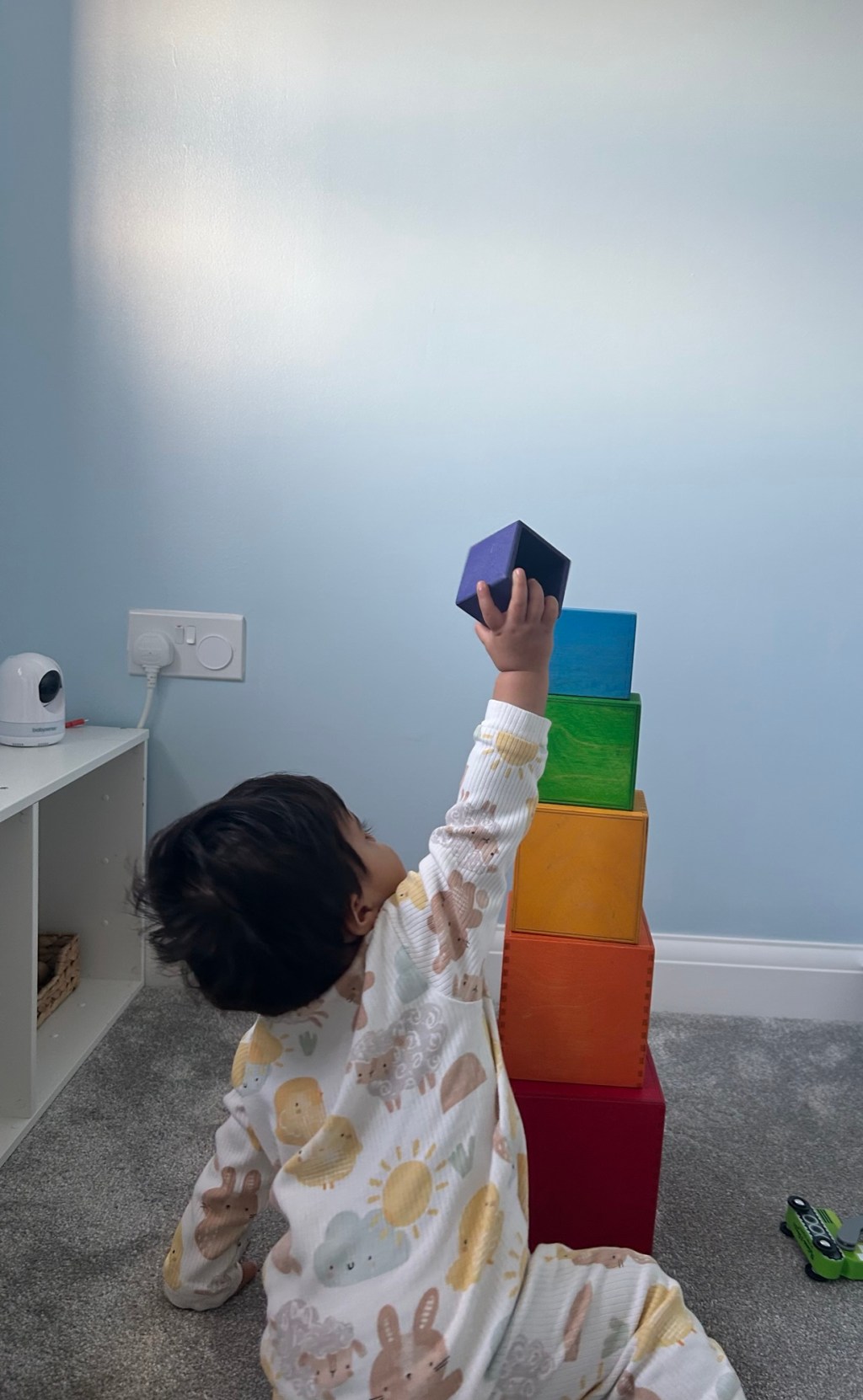
In Montessori, the early years are described as a time of sensitive periods.
These are phases where a child shows a strong interest in developing a particular skill or understanding. During these periods, learning happens more easily and with less effort, simply because the child is drawn to it.
In the toddler years, several sensitive periods can often be observed.
A sensitivity to movement is one of the most noticeable. Toddlers are constantly moving, repeating actions, carrying, climbing, and refining their coordination. This repetition is part of how control and balance develop.
There is also a sensitivity to order. This can show in a preference for things being in the same place, following familiar routines, and noticing small changes in the environment.
Language is another key area. Even before speech is fully developed, toddlers are absorbing words, sounds, and patterns from everything around them.
There is also a growing interest in independence. A desire to do things without help, to take part in everyday activities, and to try tasks repeatedly.
What defines a sensitive period is not just the skill itself, but the focus and repetition that comes with it.
The role of the adult is to observe these interests and support them by providing the right conditions, rather than interrupting or redirecting them.

Leave a comment