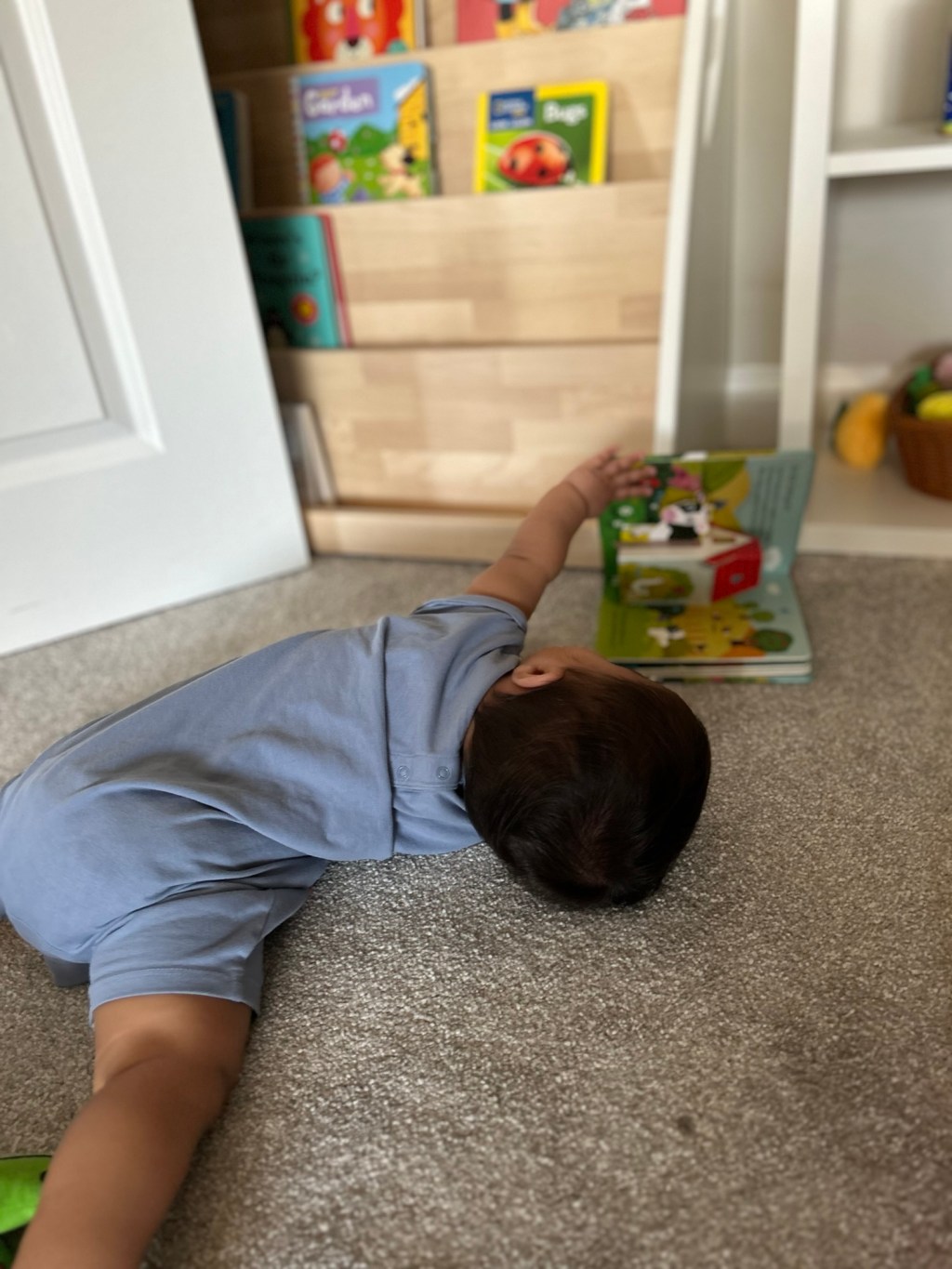
Our son is growing up in a home shaped by both his British and Indian roots. English and Tamil are not simply languages we have chosen to introduce — they are part of who he is, part of his family, and part of his identity.
In Montessori, language is understood as something the child absorbs naturally from their environment. Maria Montessori wrote in The Absorbent Mind, “The child absorbs language from his surroundings.” This absorption happens effortlessly. The child takes in the sounds, rhythm, and structure of language simply by living within it.
This understanding is supported by research in bilingualism. Barbara Zurer Pearson, in Raising a Bilingual Child, explains that “children are biologically prepared to learn language,” and when exposed to more than one language early in life, they are able to absorb both. They do not experience confusion in the way adults often assume. Instead, both languages become part of their natural development.
In our home, English and Tamil exist side by side. English is part of his everyday life and the wider environment around him. Tamil connects him to his Indian heritage, his family in India. He hears both languages in meaningful ways — through conversation, daily routines, and moments of connection.
Montessori emphasises that language develops through real interaction, not formal teaching. Kendall King and Alison Mackey, in The Bilingual Edge, note that “children learn language through meaningful use.” This reflects what we observe. He responds to familiar words, understands far more than he can express, and gradually builds his understanding of both languages.
There is no expectation for when he should speak or how he should express himself. We trust that, through repetition and experience, both languages will become familiar to him. In time, what he absorbs now will become part of how he communicates, just as it has become part of how he understands the world around him.
 Exploringmontessori
Leave a comment