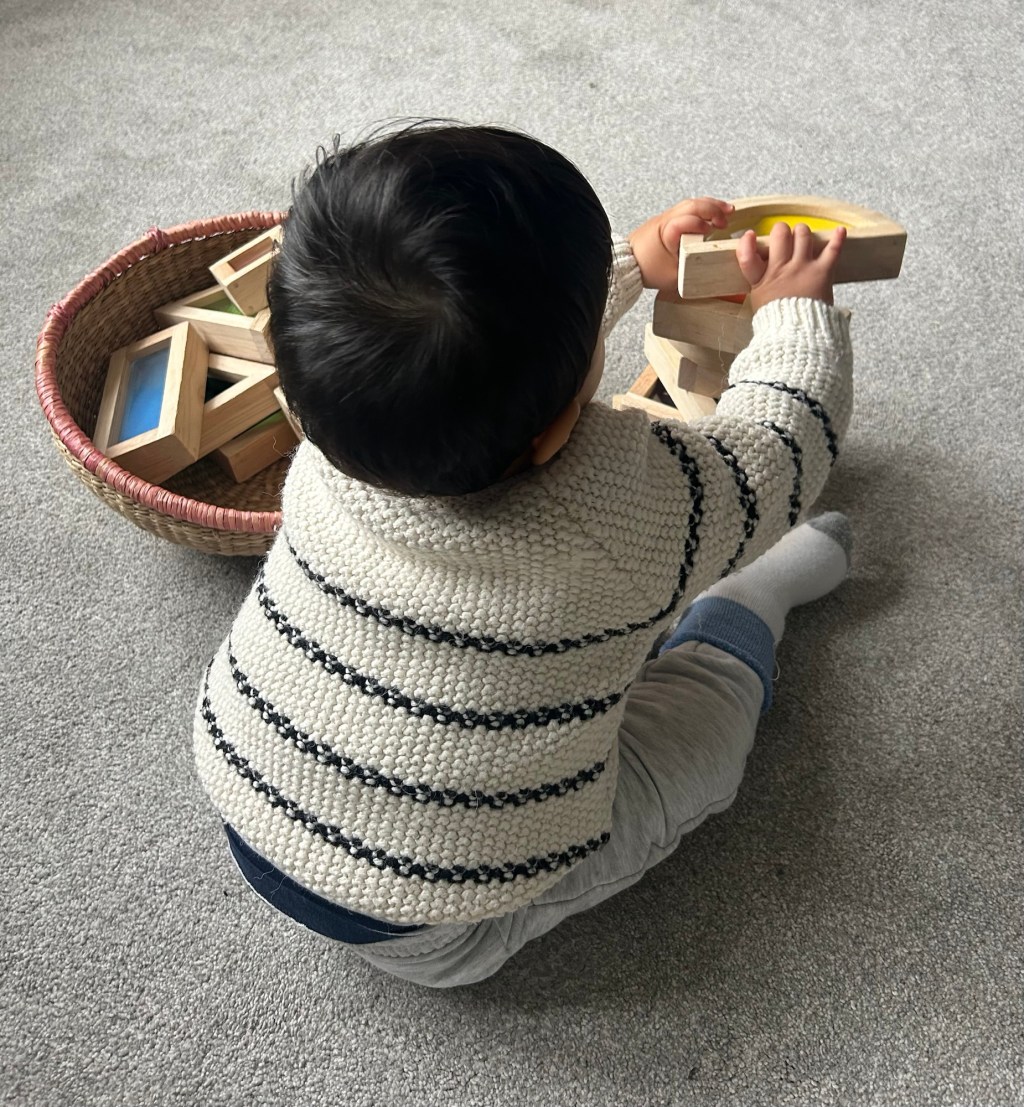
Blocks have been one of the few toys that never lost their place in our home. While other toys come and go through rotation, blocks have always remained. There is something about them that keeps drawing him back, day after day.
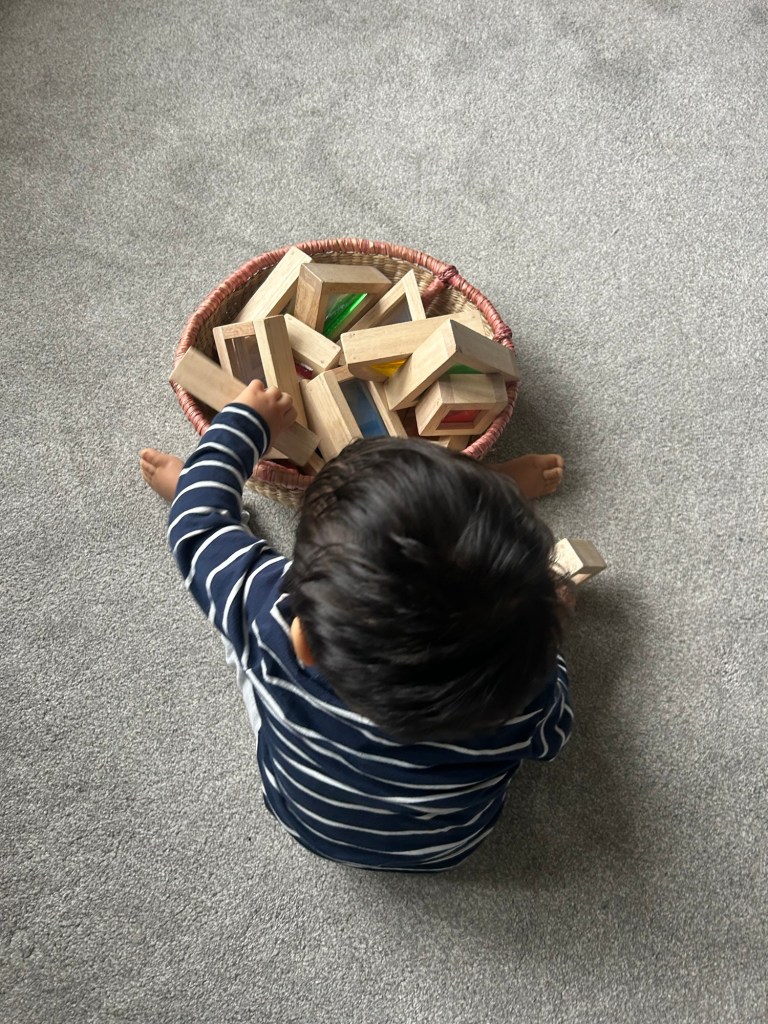
At first, I didn’t think too deeply about it. I simply saw that he enjoyed them. He would pick them up, carry them around, stack them, and return to them again later. There was no need to show him what to do. His interest came entirely from within. What stood out most was his focus. He would stay with them longer than most other toys, repeating the same actions with patience.
Watching this made me curious. I started wondering why blocks which It led me start looking more into block play and its role in early childhood. That’s when I came across the book A Constructivist Approach to Block Play in Early Childhood.
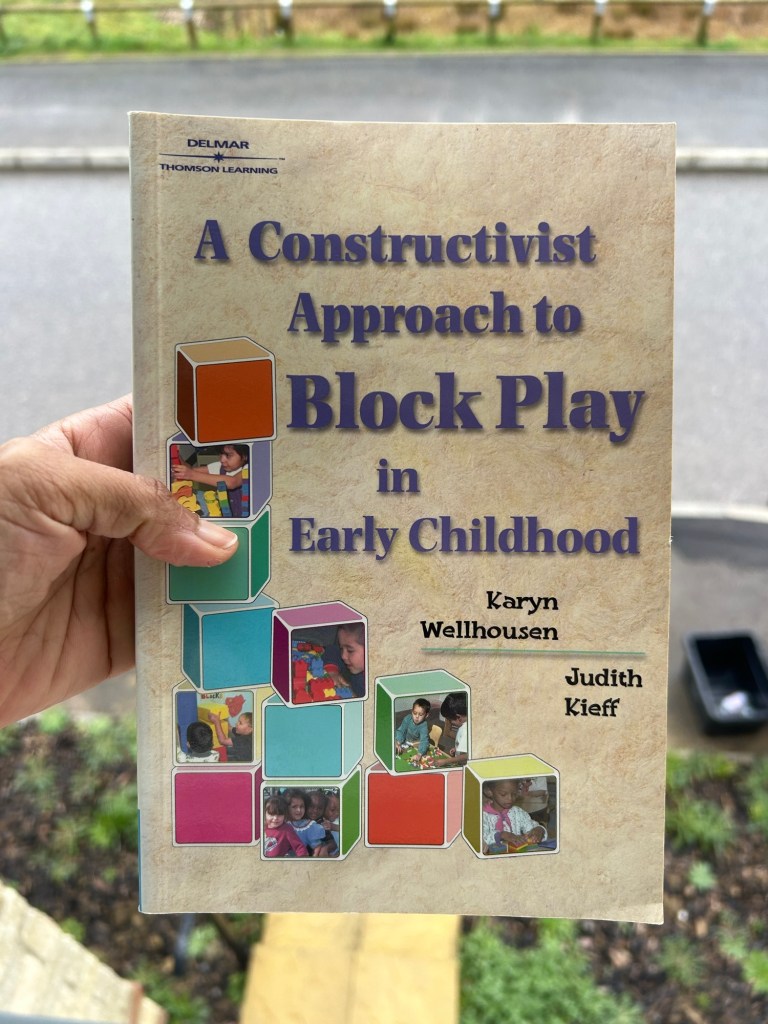
What I found most fascinating was the idea that children are not simply playing with blocks — they are actively building their understanding of the world through them. The book explains that children learn by interacting with their environment, through movement, repetition, and direct experience. They are not being taught in the traditional sense. Instead, they are constructing knowledge on their own.
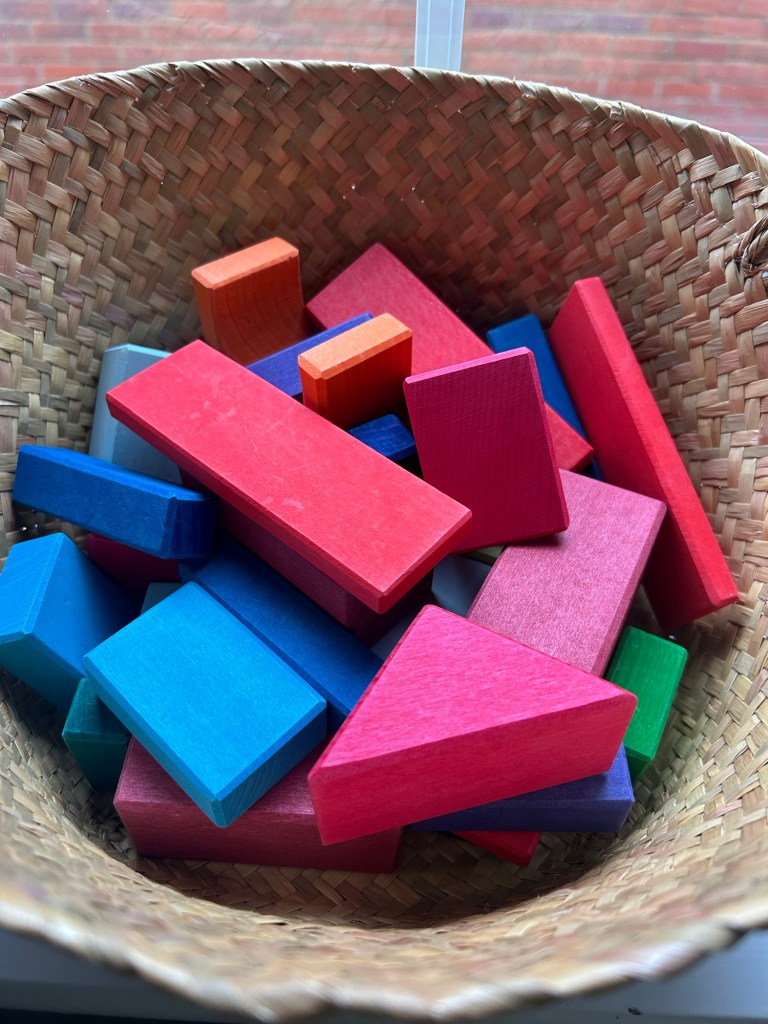
This made so much sense when I thought about what I was seeing every day.
Blocks allow children to explore concepts like balance, space, and cause and effect in a real world. When something falls, they see the result immediately. When it stays standing, they understand something worked. This process happens naturally, without instruction.
 Exploringmontessori
Leave a comment