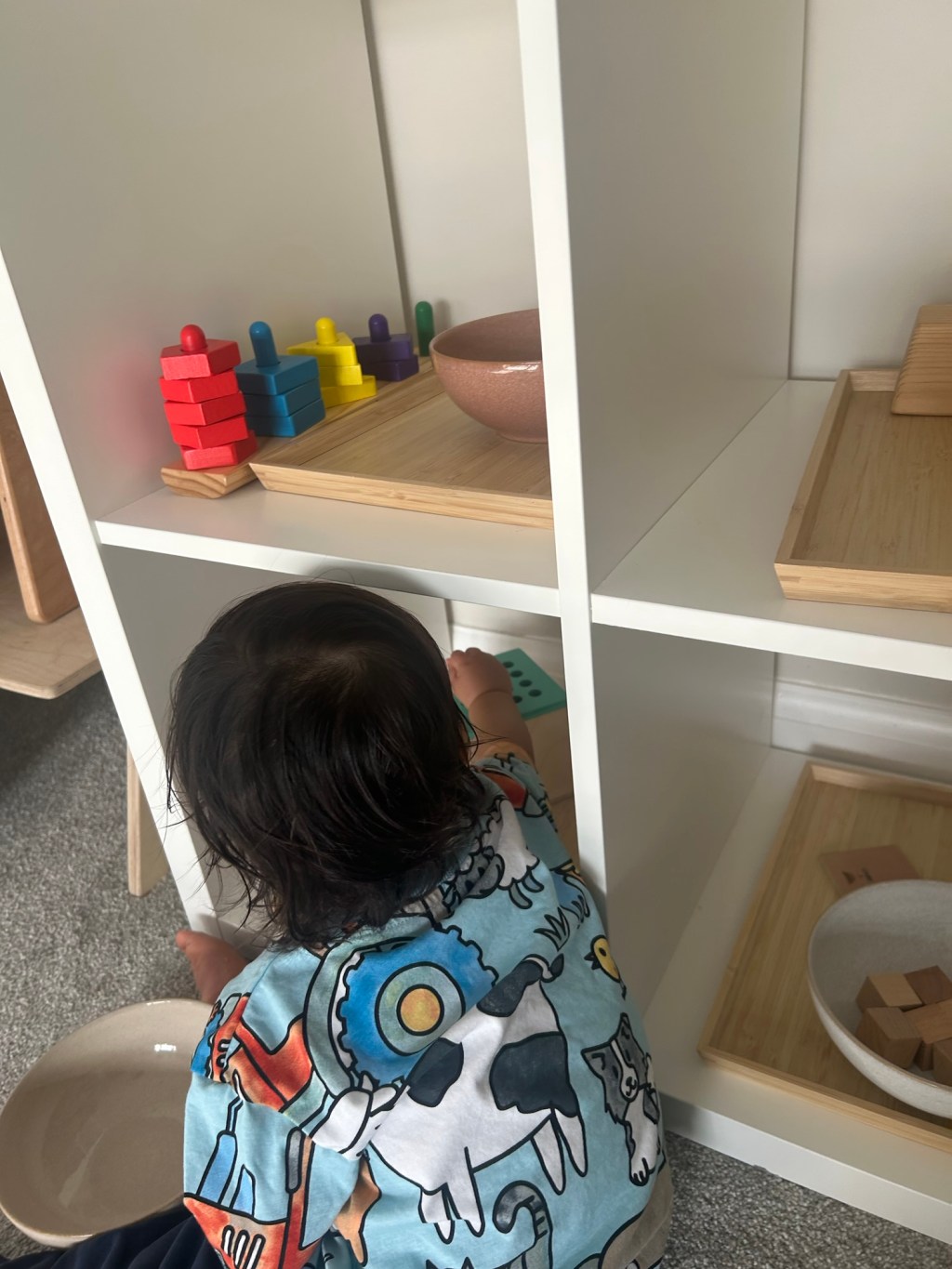
When I first started preparing things for him at home, I realised very quickly how expensive toys can be. Especially the simple wooden ones that are meant to support development and last. It didn’t feel realistic to buy everything new, especially knowing how quickly children grow and move through different stages.
Most of what he uses has come from Vinted, Facebook market place and charity shops. I started checking these places regularly, and over time I realised there is always something available. Toys that are in good or excellent condition, and for a much lower price than buying new.
One thing that helped was understanding that he doesn’t need a large number of toys at once. We usually keep around 6 to 8 toys available, and I rotate them every week depending on what he’s interested in. This means I don’t need to buy a lot at the same time. I only look for something new when I notice he’s ready for it.
I spend a lot of time observing him during the day. I notice what he repeats, what he struggles with, and what holds his attention. Sometimes he becomes focused on putting objects inside containers, stacking, or carrying things around the house. When I see those patterns, I know what kind of toy might support that stage, and that’s when I start looking.
Buying second-hand makes this process easier. I can find something specific without feeling pressure to spend too much. If it works for him, it becomes part of his rotation. If it doesn’t, I simply rotate it out and try again later.
What I’ve realised is that he doesn’t care whether something is new or second-hand. He interacts with it in the same way. He explores it, repeats actions, and returns to the things that interest him most.
 Exploringmontessori
Leave a comment