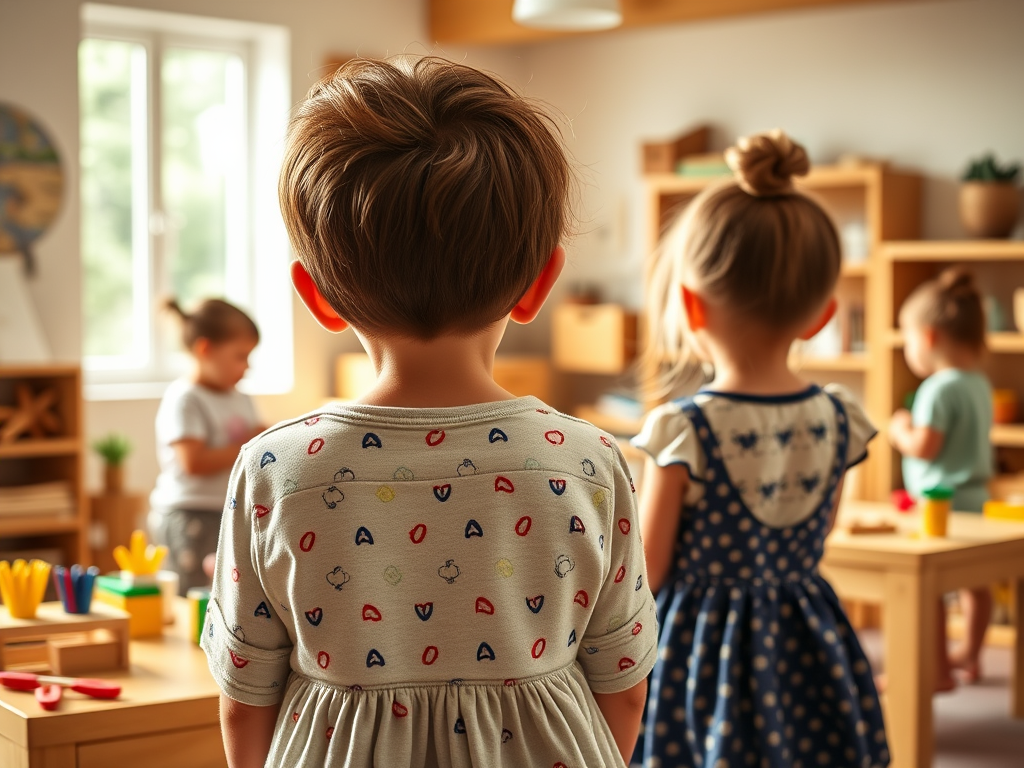
When I first started looking into Montessori, I loved how natural and respectful the approach felt. But I also wondered — as many of us do — is this backed by research, or is it just another parenting trend?
It turns out that Montessori isn’t just a “philosophy” that sounds nice on paper. There’s actually a growing body of research that supports what many parents and educators have known for over a century: that children thrive when we trust them, observe them, and give them space to learn through real, hands-on experiences.
Montessori & Brain Development
One of the biggest things that stood out to me in the research is how Montessori supports cognitive development — even from an early age. Studies show that children in Montessori environments often do just as well (and sometimes better) than their peers in traditional settings, especially in language, maths, and problem-solving.
A well-known study published in Science (Lillard & Else-Quest, 2006) found that 5-year-olds in Montessori programmes scored higher in academic tests and social understanding than children from other schools. Even more impressively, they showed stronger executive function — that’s things like focus, memory, and self-control.
Emotional & Social Skills
Montessori isn’t just about learning letters or numbers. It’s about nurturing the whole child — including how they relate to others.
Because the environment is designed to be calm, collaborative, and respectful, children in Montessori settings often develop stronger emotional regulation and social awareness. They learn how to share space, take turns, and resolve conflicts — often with little adult intervention.
Some studies even found that Montessori children displayed more empathy and fairness during play than children in conventional classrooms.
Motivation & Independence
This is probably one of my favourite parts of Montessori: the way it respects the child’s natural desire to learn. No rewards. No punishments. No gold stars. Just curiosity, choice, and trust.
Research shows that this kind of autonomy leads to higher intrinsic motivation — meaning children do things because they want to, not because they’re told to. That’s something I see even with my son at 10 months old — the joy he feels when he figures something out on his own is worth more than any praise I could give.
Long-Term Benefits
Some newer studies have looked at the impact of Montessori beyond early childhood. While research is still growing, early signs are really positive. Montessori graduates have been found to be more creative, socially conscious, and even more emotionally resilient later in life.
One 2017 study published in Frontiers in Psychology showed that Montessori-educated children maintained academic and social advantages years after leaving Montessori classrooms.
A Few Things to Consider
Like anything, Montessori isn’t a magic fix — and research depends on how well the method is implemented. Some key things to keep in mind:
- Research often focuses on authentic Montessori settings, with trained guides and properly prepared environments.
- Results vary depending on consistency, age, and family involvement.
- And of course, every child is different. No one method works perfectly for everyone.
So, What’s the Verdict?
If you’re someone who likes to follow your instincts but also likes to know there’s research behind your choices — Montessori offers the best of both worlds.
It’s grounded in neuroscience, supported by growing evidence, and — more importantly — it feels respectful, intuitive, and human. It recognises that children learn best when they’re trusted, not tested.
 exploringmontessori
Leave a comment